How a Gin Bar NYC Brings Botanical Elegance to the City
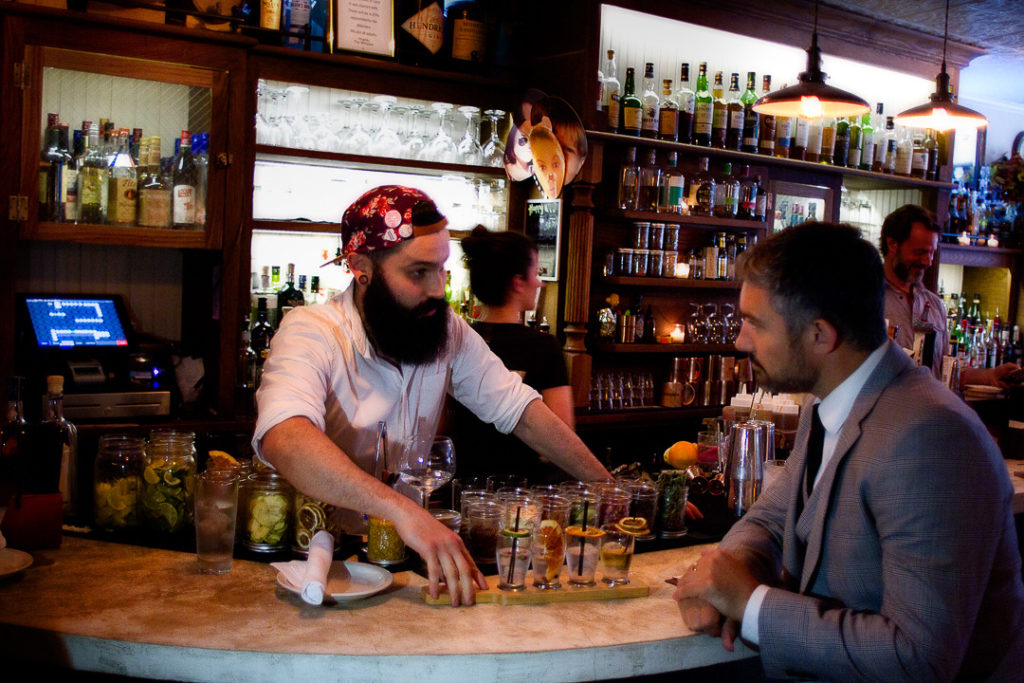
New York has never struggled to find a place for drama. It appears in architecture, in fashion, in late dinner reservations, and in cocktails that arrive with exacting garnishes and a little bit of theater. What makes a great Gin Bar NYC experience stand apart, though, is not volume or spectacle. It is restraint. It is the quiet confidence of a spirit that can carry citrus, herbs, spice, flowers, roots, and bitterness all at once, then still leave room for precision.
That is where botanical elegance comes in. A proper gin bar does more than stock dozens of labels and shake a respectable martini. It creates an environment where gin’s layered character makes sense to the guest, whether that guest is ordering a bone-dry classic before a show or lingering over a bright highball on a rainy Wednesday. In a city that rewards novelty, the best gin-led bars succeed because they understand balance. They know when to push boundaries and when to let juniper speak plainly.
I have always thought gin is especially suited to New York because it mirrors the city’s own composition. It is a blend of distinct elements working in tension. Juniper gives structure. Citrus lifts. Angelica root grounds. Coriander widens the frame. A floral note can soften the edges or sharpen them, depending on how it is used. Walk through Manhattan, Brooklyn, or Queens and you see a similar layering of character. Old brick and polished steel. A corner oyster bar and a tasting menu restaurant on the same block. Noise outside, discipline at the bar top.
Why gin feels at home here
Whiskey often enters a room with a story already attached. Tequila tends to arrive with energy and immediacy. Gin asks for attention. Not solemn attention, but attentive drinking. It rewards the kind of guest who notices the difference between lemon peel expressed over the glass and a wide strip of grapefruit zest dropped in whole. It rewards bartenders who understand that vermouth is not a side note and tonic is not an afterthought.
That sensibility works beautifully in New York. The city has long supported bars where detail matters, where the guest can tell that ice shape, glass temperature, dilution, and garnish were considered before the first order came in. Gin thrives in that setting because it is highly responsive. A slight change in tonic can move a drink from crisp to medicinal. One extra dash of orange bitters can bring hidden spice to the surface. A fresh herb garnish can either echo a botanical or bury it.
The best gin bars in the city understand this and build the entire room around it. The design may be moody or bright, grand or intimate, but the operating principle is usually the same. Everything should help the guest notice flavor without making the experience feel academic. There is a fine line between expertise and performance. Skilled hospitality stays on the right side of that line.
Botanical elegance is more than a menu concept
A lot of bars use the language of botanicals because it sounds refined. That does not automatically translate into a thoughtful program. A truly elegant gin bar expresses botanic character in three places at once: the back bar, the cocktails, and the service.
On the back bar, range matters, but curation matters more. A wall with thirty carefully chosen gins is often more useful than one with eighty random bottles. Guests do not need endless options. They need meaningful distinctions. A bartender should be able to explain why one London dry works best in a martini, why another shines in a Negroni, and why a softer contemporary gin deserves a long pour over tonic with a restrained garnish. If every bottle is described as “floral and citrus-forward,” then the program has failed to do the real work.
In the cocktails themselves, botanical elegance means clarity. A drink can be layered and surprising without becoming cluttered. That is harder than it sounds. Gin already brings an internal architecture of flavor, so every additional ingredient has to justify its place. I have seen bars bury a good gin under too much lavender, too much elderflower, too much cucumber, and too much acid. The result tastes expensive and forgettable at the same time. Better bars show confidence through subtraction. They choose one or two companions that reveal what the spirit can do.
Service is the third part, and often the part guests remember most. A knowledgeable bartender does not recite a tasting note sheet. They ask one or two useful questions and guide the order from there. Do you want something bracing or softer? Herbal or citrus-led? Spirit-forward or refreshing? Those are practical questions. They lead to a drink that fits the moment, which is what hospitality should do.
The room sets the tone before the first sip
A gin bar should look like it knows where it is. In New York, that means understanding pace. Some rooms need to absorb the city’s speed and soften it. Others should match it with clean lines, quick competence, and a little edge. Either approach can work if it is coherent.
Lighting matters more in gin bars than people sometimes realize. Too bright and every drink feels exposed. Too dark and the bar loses the visual pleasure of clear liquid, polished glassware, and fresh garnish. The most successful rooms tend to land in that middle register where a guest can admire color, watch a stir or a pour, and still feel sheltered from the street. Brass, marble, dark wood, tiled floors, banquettes in deep green or blue, and subtle floral notes in the decor are familiar choices because they complement the spirit’s identity without reducing the room to theme.
Sound matters too. Gin is conversational. People order it when they want to notice what they are drinking. A bar that forces guests to shout over the playlist is working against its own best product. That does not mean silence. It means control. You want energy in the room, but not so much that the bartender’s recommendation gets lost between records.
Even scent plays a role. Step into an excellent gin bar and you may notice citrus oils in the air, perhaps a whisper of herbs, polished wood, cold glass, maybe the faint bitterness of tonic. None of it should feel staged. It should simply smell like a bar that is awake and prepared.
The martini is often the test
Every spirit-led bar has a drink that reveals whether the operation is serious. In a gin-focused room, that drink is usually the martini. It exposes shortcuts immediately. Warm glassware, indifferent vermouth, poor dilution, limp garnish, or a bartender who asks no questions and offers no judgment, all of it shows up in the final pour.
A good martini service says a great deal about a Gin Bar NYC identity. First, it tells you whether the team respects simplicity. Second, it shows how carefully they think about ingredients that some guests barely notice. Third, it reveals whether the bar understands personal preference without abandoning standards.
The strongest programs usually have a house point of view, but not a rigid one. They may prefer a classic London dry with a measured amount of dry vermouth, or they may offer a softer build with a more aromatic vermouth and a citrus-forward expression. What matters is intent. The drink should arrive cold enough, balanced enough, and composed enough to justify its apparent simplicity.
One bartender once described a martini to me as “a room with nowhere to hide.” That remains one of the most accurate descriptions I have heard. In a gin bar, that room should feel calm, exact, and generous.
Tonic deserves respect
Few pairings are more taken for granted than gin and tonic. In a city full of ambitious cocktail menus, it can become the thing people order when they are not sure what else they want. Yet it is one of the clearest demonstrations of botanical harmony when it is done well.
Tonic water varies widely in bitterness, sweetness, carbonation, and quinine profile. A gin bar that cares about elegance treats tonic as a partner, not a mixer of convenience. The style of tonic should suit the gin, and the garnish should suit both. A heavy rosemary sprig can dominate a delicate spirit. Too much lime can flatten a more nuanced profile. Grapefruit can be revelatory with some gins and jarring with others.
I have often found that the best gin and tonics in New York are the least decorated. Plenty of cold, lively carbonation, a measured pour, dense ice, and a garnish with purpose. Sometimes a narrow lemon peel does more than a whole greenhouse clipped onto the rim. There is a lesson there that extends across the whole category. Elegance is not austerity, but it is usually selective.
Seasonal drinking gives gin another dimension
One reason gin bars stay interesting year-round is that gin is not trapped in warm-weather drinking, even though many guests initially associate it with spring and summer. New York’s seasons give bartenders an opportunity to draw out different sides of the spirit.
In the warmer months, a gin program can lean into freshness without becoming predictable. Cucumber, basil, mint, green strawberry, fennel, snap pea, and citrus all have their place when used with a light hand. The danger is overcorrection. If every warm-weather gin drink tastes like spa water with alcohol, the bar loses its backbone. Juniper should remain present, even in the most refreshing builds.
Cooler weather invites a different approach. Gin can carry savory notes beautifully. It also works with orchard fruit, tea, gentian, rosemary, sage, and dry spice. A smart autumn or winter menu often proves the point to skeptical whiskey drinkers. A stirred gin cocktail with vermouth, bitters, and perhaps a touch of herbal liqueur can be as serious and satisfying as anything built on brown spirits.
Seasonality also affects garnish, and strong bars adapt. Fresh citrus quality shifts. Herb intensity changes. Even the choice between a lemon twist and an olive can feel more fitting in one season than another. Guests may not consciously track those adjustments, but they register the care.
Food makes the experience feel complete
The relationship between gin and food is one of the most underused strengths in hospitality. Wine tends to dominate pairing conversations, and cocktails often get positioned as pre-dinner or after-dinner territory. A thoughtful gin bar challenges that assumption.
Briny, bright, herbal, and bitter elements give gin unusual flexibility at the table. Oysters are an obvious and very successful match, especially with a dry, saline martini or a crisp gin highball. Raw bar selections, ceviche, crudo, and lightly cured fish also pair naturally with gin’s lift and structure. At the same time, richer dishes can work if the drink brings enough freshness or bitterness to cut through fat.
Cheese and charcuterie are another strong territory for gin, particularly when the program includes vermouth-forward serves or drinks with subtle spice. Even a plate of good olives, almonds, and citrus-marinated vegetables can make a short drink feel more complete. The point is not to force pairings into every order. It is to recognize that a gin bar with a good kitchen, or at least a well-considered food menu, becomes more than a stop for one round. It becomes a place to stay.
The bartender’s judgment is the hidden luxury
Many guests equate luxury with rare bottles, expensive glassware, or ornate surroundings. In practice, the finest luxury in a gin bar is judgment. It is the bartender steering someone away from a flashy but unsuitable order and toward a drink they will actually love. It is a menu that knows when to stop adding ingredients. It is the decision to batch one component for consistency but build another à la minute because freshness matters.
Judgment also appears in how a bar handles trends. Every few years, certain flavors sweep through cocktail culture and start showing up everywhere. Some are useful. Some are overplayed almost immediately. The bars that age well are the ones that can absorb new ideas without losing their center. They might use a savory tincture, a tea infusion, or an unfamiliar aperitif, but the drink still tastes integrated rather than opportunistic.
That discipline is especially important with gin because the spirit invites experimentation. Distillers continue to produce styles with unusual botanicals and local signatures. That is exciting, but not every bottle belongs in every drink. Sometimes a beautifully made specialty gin is less versatile than a straightforward classic. Experienced bartenders know the difference, and they do not force novelty where reliability would serve the guest better.
What guests notice, even when they cannot name it
There are certain signs that a gin bar is operating at a high level. Guests may not articulate them in technical terms, but they feel them immediately.
- The glassware is properly chilled, or at least the drink arrives at the right temperature.
- The garnish smells fresh and intentional, not decorative for its own sake.
- The ice supports dilution rather than fighting it.
- The bartender’s questions are concise and useful.
- The menu language suggests confidence rather than showing off.
These details sound small when listed out, but together they create trust. Once a guest trusts the bar, they order more adventurously. They accept a recommendation. They come back with friends. In a city crowded with options, that trust is a serious advantage.
Neighborhood context shapes the style
No bar in New York exists in a vacuum. A gin bar in the West Village might lean intimate, polished, and quietly nostalgic. A spot in Flatiron or Nomad may present a more hotel-adjacent elegance, with larger-format service and a broad range of international labels. In Brooklyn, you may find a stronger emphasis on local distilling, natural wine crossover, or a menu that folds in seasonal produce with a little more looseness. Uptown, the mood may turn more classic, with a steadier attachment to martinis, silver service touches, and a room designed for lingering.
None of these approaches is inherently better. Gin Bar NYC What matters is whether the bar’s identity matches its setting and its clientele. A successful Gin Bar NYC understands who walks through the door at 6:30 p.m. And who arrives at 10:45 p.m., then builds a program that can hold both audiences without becoming generic. The pre-theater guest wants speed and confidence. The date-night guest wants atmosphere. The spirits enthusiast wants depth and precision. The neighborhood regular wants consistency. Balancing those needs is not easy, but when it works, the bar gains a kind of civic usefulness. It becomes part of the rhythm of the block.
Elegance requires access, not intimidation
One mistake some bars make is treating knowledge as a barrier. Gin can be technical. Distillation methods, botanical extraction, historical styles, vermouth selection, carbonation, and garnish logic can all become dense very quickly. But the point of expertise in hospitality is not to intimidate. It is to make complexity approachable.
The finest gin bars in New York know how to speak to Gin Bar NYC both the novice and the obsessive without patronizing either one. If a guest wants a familiar gin and tonic, the bar should make that drink beautifully and without a trace of condescension. If another wants to compare the effect of two different dry vermouths in the same martini build, the staff should be able to engage with that too. Botanical elegance, at its best, is generous. It invites curiosity.
This generosity often shows up in menu design. Clear descriptions help. So does a concise house recommendation section, or a few cocktails that act as bridges for people who think they do not like gin. Often they simply have not had the right one. They have had something too perfume-heavy, too sweet, or too aggressively garnished. One balanced drink can change the category for them.
Why the category keeps growing in relevance
Even in a city obsessed with what is next, gin bars remain surprisingly durable. Part of that comes from flexibility. Gin can anchor timeless classics, absorb seasonal creativity, and pair well with a broad range of foods. Part of it comes from ceremony. A martini service still feels special. A well-built gin and tonic still feels restorative. A bar that can provide both, while wrapping the experience in thoughtful design and unforced hospitality, has found a durable proposition.
There is also a broader cultural fit. New York diners and drinkers increasingly appreciate places that combine expertise with ease. They want standards, but they do not want stiffness. Gin bars are uniquely positioned to meet that expectation. They can be elegant without becoming precious, refined without becoming inaccessible. When the room, the bottle selection, the service, and the drinks all align, botanical elegance stops being a slogan. It becomes the atmosphere of the night itself.
That is the real promise of a great gin bar in this city. Not just a menu full of juniper-led drinks, but a place where flavor is organized with care, where detail serves pleasure, and where a spirit often misunderstood as sharp or old-fashioned reveals its full range. In New York, that kind of precision has always had an audience. When it is expressed through gin, it can feel almost architectural, layered, composed, and distinctly alive.
The Winslow
243 E 14th St
New York, NY 10003, United States
Phone: +1 212-777-7717
FAQ About Gin Bar NYC
How to do a gin tasting?
Start with a small pour and gently smell the gin before taking a small sip. Notice its juniper, citrus, floral or spice notes, then compare how the flavor changes with a little water or tonic. At a gin bar, ask the bartender to explain the selection and botanical pairings.
How to make the best tasting gin and tonic?
Use chilled gin, fresh tonic and plenty of ice. A common starting ratio is one part gin to two parts tonic, adjusted to taste. Choose a garnish that complements the gin's botanicals and stir gently to preserve the bubbles.
What is the smoothest tasting gin?
There is no single smoothest gin for everyone. Perceived smoothness depends on the botanical recipe, alcohol strength, serving temperature and mixer. Describe whether you prefer citrus, floral, herbal or juniper-forward flavors so a bartender can suggest a suitable style.